
My Black Sheep Dunkard Ancestor
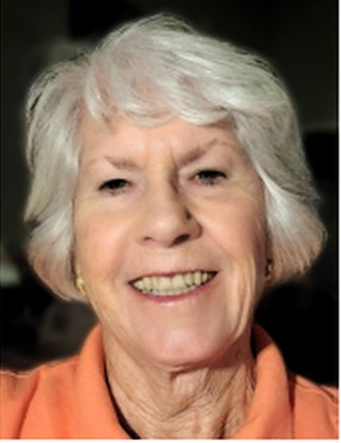
As a child in the early 1950s, I remember visiting my grandparents, who had retired to the family farm in Johnson County, Missouri. I was also a fan of the Laura Ingalls Wilder Little House books. So, I was amazed and charmed to see some of the local ladies dressed like the ones in my stories, with longish print dresses and little white caps on their heads. I was told they were Dunkards. I had no idea what that meant—maybe someone who imbibed too much?
When I became interested in genealogy and began to investigate my ancestors, I discovered that my Wampler great-grandparents had been brought up in that tradition.


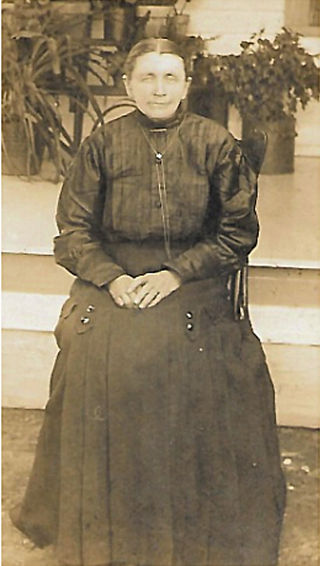
From left: 1877 Plat Map of Johnson County, MO; Elizabeth and Ephraim Wampler; Elizabeth
© Linda Winters
Who Were the Dunkards?
The surname Dunkard is derived from the German word tunker, meaning “to immerse.” These people are also known as “Dunkers,” “Brethren,” and “German Baptists.”
The Brethren movement began in Germany in the early 18th century. The end of the Thirty Years’ War brought the establishment of three official churches: Roman Catholic, Lutheran, and, for the first time, the Reformed (Calvinist) Church. Dissenters—those not belonging to one of the three recognized churches—were often persecuted.
When William Penn toured Germany in 1677, he had spoken of his plan to establish a land of religious freedom in the New World. This idea took root, and in 1719 Peter Becker brought a group of German Brethren to Pennsylvania, where they settled among Mennonites, Quakers, Amish, and others.
The Brethren were known as plain people, most often farmers. They wore simple clothing and were expected to avoid alcohol, tobacco, and any frivolity such as instrumental music or dancing. Eighteenth- and nineteenth-century Dunkards were not allowed to swear an oath or participate in politics. They believed in nonresistance and would not take up arms.
During the Revolutionary period, this alienated them from many of their neighbors and encouraged Native Americans to raid their farms. Prior to 1800, Dunkards could be excommunicated for obtaining a marriage license or bond.
Enter Ephraim Wampler
For me, the beginning and end of the family’s connection with the Dunkards was Ephraim Wampler, my great-grandfather. He was born into a Dunkard/Brethren/German Baptist and Mennonite family. His father and grandfather, as well as his mother and her family, were noted as Brethren in various sources.
Ephraim, or E.S. or Eph, was born in 1857 in Ohio, but the family had moved to Missouri by 1860 with other like-minded families.
According to family lore, the Wamplers and Cunninghams were anxious to unite their families and farmland. Elizabeth Ann and Ephraim were married at the home of her parents on Tuesday, September 9, 1877. Neither looks very happy in their wedding picture, even by the no-smiles standards of the time. Nor do they look much like “plain people.”
The 1880 census indicates that they had a daughter and that he was farming in the area. By 1885, two other daughters had arrived.
The Divorce
The December 30, 1886, issue of the Warrensburg Standard newspaper included this announcement:
Ephraim Wampler vs. Elizabeth Wampler; decree of divorce granted; custody of children to wife.
Divorce was frowned upon by the Dunkards, and I understand that my great-grandmother never overcame the scandal and shame. She is listed as a widow in later documents and dressed the part. After the divorce, there seems to have been very little contact with Ephraim.
A Man Who Didn't Fit the Mold
However, the local papers were very assiduous in covering all the news of the surrounding communities. From them, I found that Eph was a man who didn’t resemble the Brethren/Dunkard stereotype. He was a rolling stone, an adventurer, a sportsman, and a “man about town” and country.
He traveled in search of land and fortune to Arkansas, Oklahoma, North Dakota, Montana, and Oregon, to name a few. He was a high scorer in a gun club competition and went hunting and fishing with his numerous pals. He had a fancy trotting horse and buggy. He entertained friends in his home and seemed quite social.
In 1889, he married again, to Lavena Taylor, a wealthy widow, and acquired a stepdaughter. He was appointed postmaster of the small Missouri community of Valley City in 1893 and seems to have settled a bit—but not for long.
In November 1897, he left for Oklahoma, where he was building a house, and the following March his wife and stepdaughter went to visit. By 1900, he was back in Missouri. In April 1901, he and his family were off to Montana, where he planned to manage a large sheep ranch.
The Klondike Mystery
Next is the mystery.
He wrote to his family that he went off to Alaska, to the Klondike, to search for gold. And yes, he found it. Unfortunately, he was caught by the winter and had to use all his money to live, returning by ship to California without a fortune.
I cannot find any record of this, and the dates seem wrong, so my searches continue.
California and the End of the Story
He did end up in California. On March 31, 1909, he married Mamie Josephine Cox in Napa. Two months later, he was dead of an attack of apoplexy —what we would now generally call a stroke—“while working at his place… east of town,” according to the coroner.
His wife of two months was the executrix and heir to his assets, which consisted of only an acre of land valued at $300.


I found this article useful because router addresses are easy to mistype when entering them manually. 192.168.o.1.1 is a good example of a common typing mistake, especially when the letter “o” is confused with a number. The tips here can help users identify and correct the address.
I enjoyed the personal angle on tracing a “black sheep” Dunkard ancestor—those family outliers often lead to the best discoveries. I’ve been using https://buildyourstore.art/is-build-your-store-legit
The “black sheep” Dunkard ancestor angle is fascinating—family history often gets most interesting where the records and traditions don’t quite line up. I’ve been using https://blotato.online/blotato-alternatives
I enjoyed the candid look at researching a “black sheep” Dunkard ancestor—those complicated family stories can be the most revealing. I’ve been using https://sketchfab.com/nikoosman/collections/anthro-dragon-e2673969be584572876d9db72632050e
The “black sheep” label makes this Dunkard ancestor especially intriguing—family stories often hide the best clues. I’ve been using https://postiz.info/postiz-vs-mixpost