
A DNA Clue and a Marriage That Wasn’t
Finding My Research Home

Whenever I’m asked about my area of expertise in genealogy, I answer, “Ohio and West Virginia,” where my mother’s family and my father’s family, respectively, settled in the early 1800s.
Because of the time I’ve spent working with localized records, it's become easier to find information in those states—and harder to research collateral relatives who strayed elsewhere.
A DNA Breakthrough
My most exciting breakthrough in genealogy involved DNA results.
I have a great-grandmother who used her mother’s maiden name rather than her father’s surname. A man is listed as her father on her death certificate, but he appears nowhere else in the records, so that information may not be correct. Her mother married someone else a few years later, using her maiden name—indicating a prior marriage.
The biological father’s surname is common in the county where my great-grandmother was born, but I can find no one with that exact first and last name combination. However, her stepfather had that first name. I suspect the informant for the death certificate provided the correct surname, but the wrong first name.
My assumption was strengthened when I received a DNA match connected to that same family. There were at least 15 men with that surname in the county during the time period in question, so I cannot identify which one is my second great-grandfather. I am content with knowing his surname.
A Microfiche Surprise
A more amusing story involves another great-grandmother. There were several court cases between her and her husband—my great-grandfather—involving domestic violence. He eventually filed for divorce.
I visited the county archives to locate the court records. I found most of them, except for the final case, which had a file number listed in the index. When I asked the clerk where it might be located, she handed me a box of microfiche—nearly the size of a shoebox—nd told me it contained the “So---” surnames I was researching, though they were not in alphabetical order.
After some searching, I found the file and printed it. When I showed it to the clerk, she pointed out that he had withdrawn the divorce request—meaning they were still legally married.
By that time, my great-grandmother had moved to another state, where she married again a few years later. I may be the only person who knows she was never formally divorced from her first husband.
About the Author
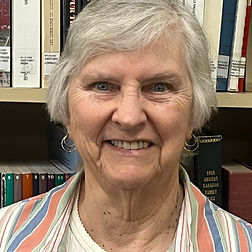
Barbara Gaitley has been a member of SCGS for more than 20 years and has volunteered extensively as a Thursday librarian and on the Library Operations committee. She leads the Legacy Family Tree software interest group and participates in the German and DNA groups. A Detroit native who moved to Los Angeles in 1963, Barbara holds bachelor’s and master’s degrees in mathematics from California State University, Northridge, and spent her career in data analysis, including nearly 20 years at the Jet Propulsion Laboratory, where she worked with Earth-observing data. She has researched her family history back to the 1600s, inspired in part by childhood conversations with her grandmother about their extended family.
SCGS is happy she joined its Board of Directors in 2026.


Your journey through genealogy, especially with the DNA breakthrough, is truly fascinating! It's amazing how much a single clue can reshape our understanding of family history. By the way, if you need inspiration for names, check out this country name generator.
Helpful information like this can make router setup less confusing, especially for beginners. Understanding the correct login address is useful when managing wireless settings, security options, and connected devices. Anyone searching for 10.0 0.1 should find clear guidance particularly helpful when troubleshooting access issues.
The detail about the informant giving the right surname but the wrong first name really stuck with me — that kind of mix-up feels so human and it's exactly the sort of thing that trips up genealogy research. I've run into similar dead ends where a record contradicts everything else you've found, and it's maddening until a DNA match cracks it open. Speaking of records that don't quite add up, I've seen old family photos get passed around so many times they turn into blurry, pixelated messes, and honestly sometimes I wonder if someone used a bad quality image maker on them just for fun. Either way, it's a good reminder that the documents we trust aren't always as reliable…
https://casino1euro.com came to mind while I read about your DNA clue, because you had a surname but fifteen possible men and no way to pick the right one. The wrong first name on the death certificate is the kind of detail that usually comes from an informant guessing, and I’ve had similar confusion in my own family tree.
The player checks both hallways regularly to ensure nothing is waiting outside the doors. If the player sees a threat, they close the door immediately and wait for it to leave. Fnaf games makes hallway checks a routine part of the player's strategy.